| The Brilliant Classics label has established a reputation for issuing very good box sets of major composers at bargain prices. Most famous in their catalog are the Bach, Beethoven, and Mozart complete works editions. Perhaps as an appendix to the Bach complete edition, we have this 7-CD set of music from the 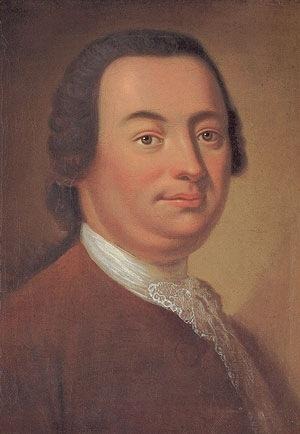 sons of Johann Sebastian Bach: Carl Philipp Emanuel Bach, Johann Christian Bach, Wilhelm Friedemann Bach, and Johann Christoph Friedrich Bach. None of Bach's sons achieved the stature or reached the pinnacles of their father, but there is excellent music here. And it should also be said at the outset that this is not a "complete works," edition, but rather a showcase of the better works by Bach's sons. sons of Johann Sebastian Bach: Carl Philipp Emanuel Bach, Johann Christian Bach, Wilhelm Friedemann Bach, and Johann Christoph Friedrich Bach. None of Bach's sons achieved the stature or reached the pinnacles of their father, but there is excellent music here. And it should also be said at the outset that this is not a "complete works," edition, but rather a showcase of the better works by Bach's sons. The first three discs are works of CPE Bach: The Berlin Symphonies, some of the cello concerti, and some of the flute concerti. A pick-up orchestra calling themselves the CPE Bach Chamber Orchestra plays the Berlin Symphonies under Hartmut Haenchen, and the playing is mostly very good. Balazs Mate is the soloist for the cello concerti, with mixed results, but his style is certainly sympathetic to the pieces if his intonation occasionally misses. Machiko Takahashi is our flute soloist, though two of the three flute concerti were originally for oboe, and the lower oboe range doesn't always make for brilliant flute playing. Takahashi's technique often seems muddy, though his sound is very lush. Nonetheless, it was common practice for later Baroque and early Classical concerti to be played on a variety of instruments, so the approach is certainly valid. The Concertgebouw Chamber Orchestra sounds fantastic in its accompanying role. The next two discs are works of JC Bach--random symphonies and sinfonia concertanti. The symphonies are played well enough, but the sinfonia concertanti are the better listen in the hands of the London Festival Orchestra. Only one disc of WF Bach--random sinfonias (mostly in introduction to his father's cantatas) and a very nice suite in G Minor which may or may not be his own composition. Again, the CPE. Bach chamber orchestra performs admirably. And finally, a disc of three of JC Bach's symphonies in polished performances by the New Bach Collegium Musicum under Burkhard Glaetzner. These are more extensive pieces in a thoroughly Classical style, with longer movements and a style that clearly paves the way for Haydn and Mozart. This is a fascinating insight into the Bach legacy and its imprint on the Classical era, which was already dawning as JS Bach's life was ending. All things considered, this is very interesting music, well-recorded and performed, at a bargain price. If you're curious about Bach's legacy and the transition from the Baroque to the Classical, this is very much worthwhile. |


 t epochs in European history in which society, politics, and culture all underwent fundamental change, heralding the advent of European Modernity. The transition from the 18th to the 19th century marked the beginning of the collapse of an epoch, characterized by upheaval and reorientation in the most diverse spheres.” Thus the title of the set comes clearly into focus.
