Showing posts with label Ormandy. Show all posts

Sunday, October 10, 2010

Saint-Saens - Symphony No.3 in C Minor, Op.78 - Murray, Ormandy, Philadelphia Orchestra


Review:

I can pay no higher compliment to this performance by Ormandy, the Philadelphians and Telarc than to say, that this is the only performance that is as perfect and as moving as the Charles Munch/Boston Symphony Orchestra RCA performance from 1959. That CD has the well-earned status as the benchmark of perfection in performance, even after forty years. I've probably owned a dozen recordings of this symphony and this is the one I invariably come back to, along with the one by Charles Munch. However, this one is soCamille Saint-Saëns. splendidly recorded, I believe it is an essential recording. Ormandy gives one of his last & greatest performances, and the Philadelphians clearly want to leave him a legacy, pulling all of the emotional depth present in the Munch/Boston/RCA release. Murray proves why he has earned so much respect as an organist & interpreter of French Organ repertoire. This recording is a little unique in that the recording space sounds quite large, and it has a little more reverberation than most, but Telarc did a magnificent job in being able to pick up so much detail. I cannot say enough about the detail of the woodwinds they achieve while still capturing the Philadelphia Orchestra's famed string (and brass) sections. The only possible way it could be any better is that the fast piano runs in the last scherzo are just a tad more faint than in most recordings due to the reverberation & recording space, but that is an extremely minor flaw compared to the richness of detail found all over this recording. The adagio of this symphony alone is worth the price of this disc. Ormandy, like Munch plumbs the depths of aching, of deep longing & the eventual ecstatic peace that make the adagio as admired as anything written by Mozart, Bach, Beethoven, Brahms or Mahler. I really believe that any of them would have been deeply moved if they heard this peace, and of course Mahler certainly did, and must have admired it deeply! Saint-Saens himself admitted, sincerely & quite humbly, after finishing this symphony, that he could do no more. He had achieved perfection, and Ormandy, Murray & the Philadelphians have paid tribute to Saint-Saens by doing the same.--Amazon


ape, scans

Saturday, September 4, 2010

Sibelius - Symphonies 4 and 7 - Ormandy, Philadelphia Orchestra


Great news! Arkivmusic.com has gotten its "on demand" hands on the Japanese RCA Ormandy Edition, making these recordings available in North America at far saner prices. Some of these performances are outstanding, nowhere more so than here--one of the greatest Sibelius recordings ever made. Eugene Ormandy's Fourth Symphony is magnificent: gaunt, direct, and unflinching, with stunning string playing and the most intelligent approach on disc to the percussion conundrum in the finale (chimes at the "sonore" climax, glockenspiel everywhere else). Some listeners might prefer a swifter tempo in the scherzo, but this interpretation is all of a piece, taking in the work as if in one sweeping gesture, and Sibelians will understand just what that means.
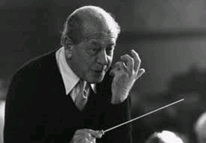
Ormandy The Seventh also is a perfectly paced, immaculately played performance, with none of the mannerisms in the pastoral interlude that disturb Ormandy's first recording for Sony. As for the tone poems, there is no finer performance of Oceanides available anywhere, and Pohjola's Daughter is just about as good. Ormandy could come across as a somewhat stiff and unsmiling interpreter, but not here, and particularly not in music that requires an absolutely logical, indeed mathematical approach to tempo relationships between sections. Both in terms of performance quality and programming (Sibelius at his very greatest throughout), it just doesn't get any better.

The Japanese edition apparently used original unaltered sources, meaning the tapes were not remastered in any way, and so vary widely in sound quality--from very good, as here, to virtually unlistenable (Mahler Second). So until someone goes back and redoes them from scratch--and we may have a very long wait--you will have to buy selectively. These recordings, from the late 1970s, stand among the best-sounding of the lot. A magnificent release that you won't want to miss!—David Hurwitz

CD INFO

Ape, scans

Tuesday, August 24, 2010

The Philadelphia Orchestra Plays Bach (Family)


Purists will assert that the Philadelphia Orchestra has no business playing Bach. It's too bad they feel that way, particularly when the conductor is Leopold Stokowski, reunited with the orchestra after a hiatus of almost two decades. Eugene Ormandy invited Stoki back in 1960, and MH2K62345 documents the results: confident, suave recordings of the Fifth Brandenburg Concerto and the conductor's moving arrangements of three Chorale Préludes. Ormandy was an expert arranger and conductor of Bach himself, as can be heard from the balance of this 2-CD set, which contains what used to be Columbia MS6180 ("Bach by Ormandy" – also recorded in 1960) and MS6342 ("The Bach Family" – works by Johann Christian Bach, Carl Philipp Emanuel Bach, and Wilhelm Friedemann Bach, recorded in 1957). None of it may be "authentic," but it all sounds luscious enough to make new friends for the music and the performances.

CD INFO

Ape, scans

LinkWithin

Related Posts with Thumbnails